
How Does Affiliate Marketing Work? 2026 Guide
How does affiliate marketing work? A plain-English 2026 guide for site owners covering links, tracking, commissions, traffic, and realistic earnings.
How does affiliate marketing work? In plain English: you recommend a product or service, a reader clicks your special tracking link, and if they buy or complete a qualifying action, you earn a commission. That’s the core model. For many publishers, it works best alongside ads, not instead of them, which is why I’d treat it as part of a broader monetization mix with display ad monetization rather than a magic shortcut.
Affiliate marketing is performance-based. You are not paid just for placing a link. You get paid when a tracked conversion happens under the merchant’s program rules. As of 2026, approximately, that can mean a sale, a free trial, a qualified lead, or sometimes a click, depending on the offer. For content sites, the most common setup is a commission on completed purchases.
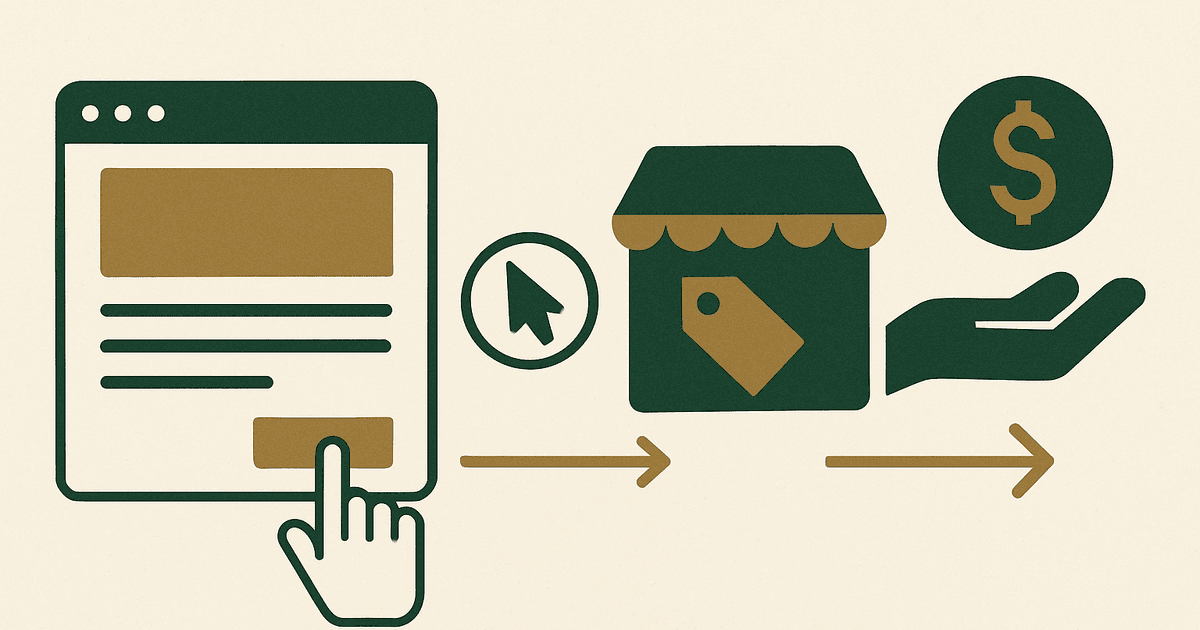
Affiliate marketing explained in one simple flow
- You join an affiliate program directly with a brand or through a network.
- The program gives you a unique tracking link.
- You place that link inside relevant content: reviews, tutorials, comparison posts, tools pages, email sequences, or resource pages.
- A visitor clicks the link and lands on the advertiser’s site.
- A cookie or another tracking method attributes that visitor to you.
- If the visitor completes the required action during the attribution window, the sale or lead is credited to your account.
- After the lock period and payout schedule, you receive your commission.
That’s the mechanical answer to how does affiliate marketing work. The practical answer is that it works when your content creates buying intent and sends readers to a product that genuinely matches what they need. If the content is weak, the traffic is untargeted, or the offer is a poor fit, the links won’t convert no matter how many you add.
The four parties involved
Most affiliate setups involve four parties. Understanding each one helps you see where commissions come from and why tracking can break.
| Party | Role | What matters to you |
|---|---|---|
| Publisher | That’s you: the site owner, creator, or email sender promoting an offer | Your traffic quality, content intent, and placement strategy drive conversions |
| Reader | The person who clicks and may buy | Their problem awareness and purchase intent matter more than raw pageviews |
| Merchant | The company selling the product or service | Commission rate, conversion rate, refund rate, cookie duration, and payout terms vary widely |
| Affiliate network or platform | The software layer or marketplace that tracks and reports conversions | Reporting quality, approval rules, payment thresholds, and available offers affect your results |
How affiliate tracking actually works
Tracking is usually based on a unique affiliate ID attached to your URL. When someone clicks, the merchant or network records that click and attempts to associate later conversions with your referral. Historically this relied heavily on cookies. As of 2026, approximately, programs may use a mix of first-party cookies, server-side tracking, account-based attribution, coupon-code attribution, or platform-specific tracking.
The big variables are cookie duration and attribution model. A 24-hour cookie means you only get credit if the purchase happens quickly. A 30-day or 90-day window gives your content more room to convert. Some programs also use last-click attribution, meaning the most recent affiliate gets the commission. Others have more nuanced rules, but last-click is still common.
- Cookie duration: how long your referral remains eligible for commission
- Attribution model: who gets credit if multiple sources influence the sale
- Allowed traffic sources: SEO, social, email, paid ads, and incentives may be restricted
- Locked vs approved commissions: some sales appear first, then finalize after refund windows
- Minimum payout threshold: you may need to reach a set amount before getting paid
How you get paid
Affiliate programs pay in a few common ways. For content publishers, percentage-of-sale and fixed-per-sale payouts are the most common. Lead-gen niches may use fixed payments for demo requests, trial signups, or form submissions.
| Commission type | How it works | Common use case |
|---|---|---|
| Percentage of sale | You earn a share of the order value | Software, ecommerce, digital products |
| Flat fee per sale | You earn a fixed amount when a purchase is completed | Subscription products, some consumer services |
| Per lead | You earn when a user submits a qualified form or starts a trial | B2B software, insurance, education, finance |
| Recurring commission | You earn monthly or annually while the referred customer stays active | SaaS and memberships |
Payout timing varies. As of 2026, approximately, many programs pay net 30 to net 60 after the month closes, though some are faster and some are slower. If the product has a refund period, your commissions may remain pending until that window passes.
Where affiliate links fit on a website
Affiliate links work best where readers are already evaluating options. That usually means content with commercial intent, not random blog posts with unrelated links stuffed into them.
- Product reviews
- Best-of lists
- Alternatives and comparison pages
- Tutorials that naturally require a tool
- Resource pages
- Deal or coupon pages if allowed by the program
- Email newsletters that continue the same recommendation
For example, a tutorial about starting a newsletter can naturally mention an email platform. A web hosting comparison can recommend hosting. A budgeting article may recommend accounting software. A general lifestyle post with a forced software link usually performs poorly because the user intent is wrong.
What makes affiliate content convert
The biggest driver is intent. A page that targets readers close to a decision will often earn more than a page with far more traffic but weak commercial relevance. That’s why affiliate marketing explained properly is less about link placement and more about matching content to a problem and a product.
- Clear problem-solution match
- Specific use cases instead of vague praise
- Transparent pros and cons
- Comparison context: who the product is for and not for
- Strong page structure with obvious calls to action
- Fast page speed and clean UX
- Trust signals from firsthand testing or credible evaluation
How much can affiliate marketing make?
Realistically, earnings vary by niche, geography, and season. They also vary by traffic intent more than total sessions. A small site with highly targeted buying-intent traffic can outperform a much larger informational site.
As of 2026, approximately, content sites often see affiliate RPMs ranging from low single digits on weak-intent traffic to much higher double-digit or even triple-digit RPMs on strong commercial pages. That is a very wide range because finance, software, and B2B can behave very differently from general lifestyle, entertainment, or broad news content. Treat any universal earnings claim with skepticism.
If you also run display ads, compare affiliate performance against ad RPMs. As of 2026, approximately, common display ad pathways include AdSense for beginners, Ezoic and Monumetric for mid-tier publishers, and Mediavine or Raptive for larger publishers that meet traffic and quality thresholds. Those ad earnings also vary by niche, geography, and season, which is why many publishers use both models instead of choosing only one.
Roughly $2,430–$4,050/mo in commissions at this intent
Affiliate basics: the metrics that matter
If you want to improve results, track the whole funnel instead of obsessing over raw clicks.
| Metric | What it tells you | Why it matters |
|---|---|---|
| Click-through rate | How often readers click your affiliate link | Shows whether your placement and offer framing are working |
| Conversion rate | How often clicks turn into commissions | Reveals offer quality and visitor intent |
| Earnings per click | Average revenue per outbound affiliate click | Helps compare programs and pages |
| Affiliate RPM | Revenue per 1,000 pageviews | Lets you compare affiliate pages against ad-monetized pages |
| Refund or reversal rate | How often tracked commissions are canceled | Protects you from overvaluing a program |
Common beginner mistakes
- Choosing programs before understanding what their audience actually needs
- Promoting low-converting products just because the commission rate looks high
- Hiding disclosures or making them hard to find
- Adding affiliate links to low-intent pages and expecting them to convert
- Ignoring merchant terms about email, paid ads, or coupon use
- Relying on one program for most revenue
- Not checking whether links break, redirect incorrectly, or go out of stock
A high commission percentage does not automatically mean a good offer. A lower-paying product with strong conversion and low refund rates can produce better earnings than a flashy program that looks great on paper.
Do you need a lot of traffic?
No. You need the right traffic. Affiliate marketing can work with modest traffic if the content attracts readers near a buying decision. On the other hand, large volumes of broad, low-intent traffic often monetize better with display ads than with affiliate links.
That distinction matters when planning your monetization stack. Informational traffic can feed ads and email list growth. Commercial-intent traffic can feed affiliate revenue. The strongest sites usually build both.
Compliance and trust matter more than most beginners think
You need clear affiliate disclosures, accurate claims, and honest recommendations. If you have a material relationship with a merchant, disclose it where readers will actually see it. Don’t imply results you can’t support, don’t fake product experience, and don’t copy generic review content just to insert links.
A simple way to get started
- Pick a topic where readers eventually buy a tool, service, or product.
- Identify the pages on your site with the strongest commercial intent.
- Join a few relevant affiliate programs with solid product-market fit.
- Create or improve comparison, review, and tutorial content.
- Add clear disclosures and natural calls to action.
- Track clicks, conversions, and earnings per page.
- Double down on pages and programs that show strong EPC and RPM.
If you want the shortest possible summary, here it is: affiliate marketing works when your content helps the right person choose the right product at the right moment, and your tracking plus program terms allow that sale to be credited to you.
Once you understand that, the next question is usually whether your traffic level and niche can support meaningful revenue. For that, see affiliate marketing earnings benchmarks and planning guidance.
How does affiliate marketing work for beginners?
Do affiliate marketers get paid per click?
How long does it take to make money with affiliate marketing?
Is affiliate marketing better than display ads?
Get the next guide by email
One practical email when we publish.