
What Is Header Bidding? A Plain-English Guide
What is header bidding? A plain-English guide to how it works, header bidding vs waterfall, Prebid, and when publishers should use it.
What is header bidding? It’s a way to let multiple ad buyers bid on your ad inventory at the same time before your ad server chooses a winner. In plain English, header bidding increases competition for each impression, which can improve fill and RPMs compared with older waterfall setups. If you’re working through a broader ad strategy, start with this display ad monetization guide so the mechanics fit into the bigger revenue picture.
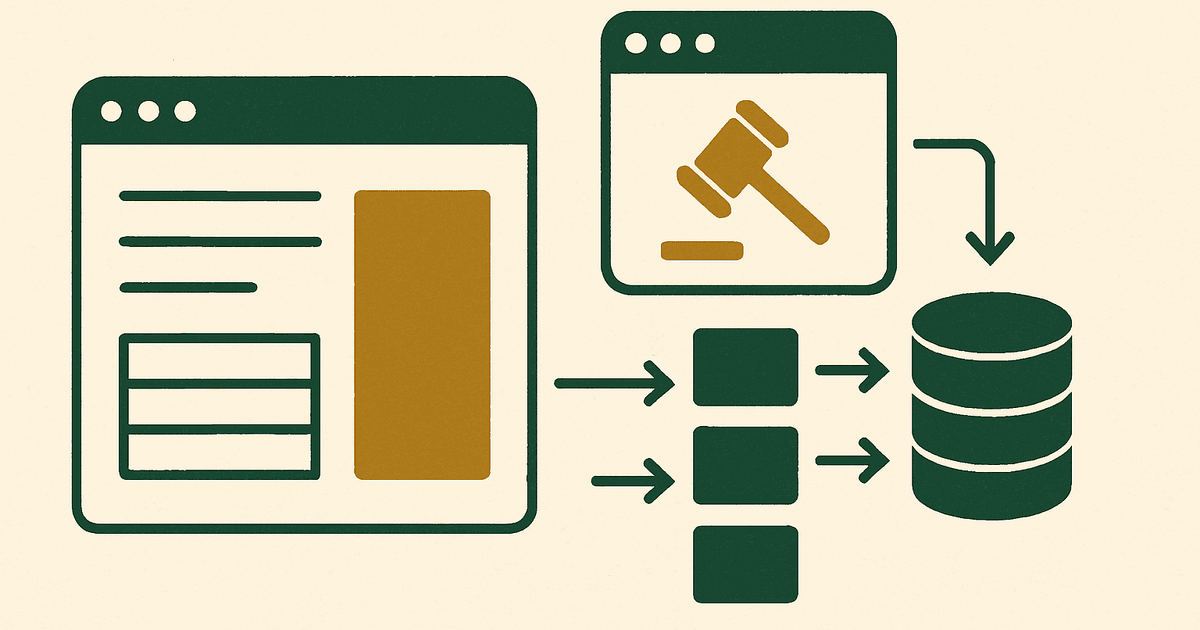
The short version: instead of asking one network after another whether they want an impression, your page runs a quick auction across several demand sources at once. That matters because the more qualified bidders you put into a fair auction, the better your chances of getting the highest available price for that user at that moment.
What header bidding means in plain English
Traditional display advertising often used a waterfall. The publisher would offer the impression to Network A first. If Network A passed or bid too low, the request moved to Network B, then Network C, and so on. That system was easy to understand, but it had a major flaw: lower-priority partners often never got a real chance to compete, even when they might have paid more.
Header bidding flips that around. Before the ad server makes a decision, several SSPs, exchanges, and demand partners get the bid request in parallel. Each returns a bid, the bids are compared, and the ad server can then choose the winning line item or pass key-value targeting that reflects the top price.
From a publisher’s perspective, the appeal is straightforward:
- More buyers see the same impression.
- Those buyers compete at the same time.
- Competition usually improves yield more than a rigid priority stack.
- You get more visibility into bid density, win rates, and pricing behavior.
That doesn’t mean header bidding is magic. It can improve monetization, but only when the setup is technically sound and the site has enough quality traffic, viewability, and advertiser demand to make the auction meaningful.
How header bidding works
A basic header bidding flow usually looks like this:
- A user loads your page.
- A header bidding wrapper or script starts an auction before the ad server call completes.
- Multiple demand partners receive the same opportunity to bid.
- Each partner returns a bid amount and creative details if they want the impression.
- The wrapper identifies the highest eligible bids.
- Your ad server, often Google Ad Manager, compares those bids with other eligible demand such as direct campaigns or exchange demand.
- The winning ad renders on the page.
There are a few moving parts behind that simple flow. The wrapper coordinates bidder calls. The demand partners decide whether they want that impression and at what price. The ad server applies delivery rules, priorities, and targeting. Latency controls decide how long the page waits for bids before moving on.
Most publishers hear about client-side header bidding first, where the auction runs in the browser. There’s also server-side header bidding, where many auction steps happen on a server instead of the user’s device. Hybrid setups combine both.
Client-side header bidding
Client-side header bidding is the classic setup. The browser calls multiple bidders directly. Its main advantage is transparency and generally stronger cookie or identity match rates on the client, which can help bid quality. The downside is page weight and latency. Too many bidders or poorly managed timeouts can hurt Core Web Vitals and user experience.
Server-side header bidding
Server-side header bidding moves bidder communication away from the browser. That usually reduces on-page script load and can make a setup easier to scale. The tradeoff is that some bidders may have less user-level signal, which can reduce bid competitiveness in some cases. Good server-side setups are often faster, but not always more profitable impression for impression.
What Prebid is
Prebid is the open-source framework most publishers mean when they talk about independent header bidding. Prebid.js is the client-side wrapper, and Prebid Server supports server-side auction setups. It is not an ad network itself. It’s the technology layer that helps publishers connect multiple bidders in a standardized way.
If you see a platform say it supports Prebid, that generally means it can plug into this broader ecosystem of adapters, demand partners, analytics, and auction controls. For sophisticated publishers, that flexibility is a big deal. For smaller publishers, it can also mean more setup and more ongoing maintenance.
Header bidding vs waterfall
The simplest way to understand header bidding vs waterfall is sequential competition versus simultaneous competition.
| Factor | Waterfall | Header bidding |
|---|---|---|
| Auction style | Partners are called one after another | Partners bid at the same time |
| Revenue potential | Often lower because priority can block better bids | Often higher because more buyers compete fairly |
| Transparency | Usually limited | Usually better bid visibility |
| Complexity | Simpler to launch | More technical to implement and manage |
| Latency risk | Can still be slow, but simpler | Can be slow if poorly configured |
| Best fit | Very small or basic setups | Publishers optimizing yield across multiple demand sources |
In practice, many modern publisher stacks are not pure waterfall anymore. They mix unified auctions, exchange competition, server-side demand, direct-sold campaigns, and some remnants of priority-based routing. But as a teaching model, waterfall means “ask buyers in order,” while header bidding means “let them compete together first.”
Why publishers use header bidding
Publishers adopt header bidding for one main reason: yield. More specifically, they want to raise the value of their display inventory without relying on a single buyer.
- Higher bid competition across ad exchanges and SSPs
- Potentially better CPMs and page RPMs
- Less dependence on one network
- More control over which partners can bid
- Better auction data for optimization decisions
- Improved monetization of geographies or devices where one partner is weak
As of 2026, approximately, many publishers still begin with Google AdSense because it’s accessible and easy to implement. As traffic grows, they often look at managed platforms and premium networks such as Ezoic, Monumetric, Mediavine, and Raptive, which may use combinations of header bidding, exchange competition, direct demand, and proprietary optimization.
For example, Ezoic is often considered by smaller-to-mid-sized publishers who want more optimization options beyond a basic AdSense setup. If that’s where you are, this Ezoic review is the practical next read.
When header bidding helps the most
Header bidding tends to help most when a site already has enough scale and quality for real buyer competition. That usually means:
- Consistent traffic, not just one-off spikes
- Decent viewability and ad placement quality
- A niche with advertiser demand
- Meaningful traffic from higher-value geographies such as the US, UK, Canada, or Australia
- A technical setup that can handle additional scripts or server calls without wrecking performance
If your traffic is very small, the gains may be modest. If your audience is mostly in lower-CPM regions, increased auction competition can still help, but results may be muted. If your pages are already heavy and slow, adding a badly configured header bidding stack can hurt more than it helps.
That’s why premium managed networks often have traffic thresholds. As of 2026, approximately, Monumetric has typically been known for entry points around tens of thousands of pageviews per month, Mediavine around 50,000 sessions per month, and Raptive around 100,000 pageviews per month, though exact requirements and acceptance standards can change. Those companies are not just buying your inventory; they’re evaluating whether your site can support a higher-yield managed ad stack.
When header bidding is probably overkill
Header bidding is often overkill if you’re in one of these situations:
- Your site is brand new and has very little traffic.
- You’re still struggling with basic ad placement and viewability issues.
- You don’t have the technical resources to manage wrappers, timeouts, and bidder troubleshooting.
- Your current revenue is too small for the added complexity to matter.
- You can join a strong managed network that already handles the auction layer for you.
For many publishers, the right answer is not “build your own Prebid stack tomorrow.” It’s “graduate from AdSense to a stronger managed setup when your traffic qualifies.” That can capture many of the economic benefits of increased demand competition without forcing you to become an ad ops specialist overnight.
The tradeoffs: revenue, speed, and complexity
Header bidding is a classic optimization tradeoff. It can improve monetization, but it introduces operational costs.
| Potential upside | Potential downside |
|---|---|
| Better CPM competition | More setup and maintenance |
| Higher page RPMs in some cases | Higher latency if bidder count or timeout is poorly tuned |
| Broader demand access | Harder troubleshooting |
| Less dependence on one buyer | More reporting complexity |
| Greater auction transparency | Possible UX and Core Web Vitals impact |
On earnings, the honest answer is that RPM uplift varies by niche, geography, and season. Some publishers see meaningful gains when moving from a basic waterfall or single-network setup into stronger competition. Others see only marginal improvement after fees, latency costs, and implementation overhead. There is no universal percentage increase you should assume.
The same goes for baseline display earnings. As of 2026, approximately, page RPMs can range from low single digits on weaker traffic to much higher ranges on premium niches and top-tier geographies, but the spread varies by niche, geography, and season. Header bidding can improve the auction, but it does not turn low-value traffic into premium traffic.
Should small publishers use header bidding?
Usually not directly, at least not at first. Small publishers often get better results by focusing on:
- Publishing better content that grows search traffic
- Improving ad viewability and layout
- Avoiding excessive ad density
- Building a stronger share of Tier 1 traffic
- Moving from a basic setup to a managed monetization partner when eligible
That’s one reason platforms like Mediavine and Raptive are attractive once a site qualifies. They package premium demand relationships, auction optimization, and ad ops expertise in a way that most solo publishers would struggle to replicate independently. If you’re comparing that route, read this Mediavine review before you decide.
A simple example
Say your site has one display slot. In a waterfall setup, Network A gets first look at $1.20 CPM. The system accepts that because A is first in line. But Network C, if asked at the same time, might have paid $1.80 for that exact user. In a waterfall, you may never discover that.
With header bidding, Networks A, B, and C all bid together. If C bids highest and is eligible to serve, the ad server can route the impression accordingly. That doesn’t guarantee a big lift on every pageview, but across enough traffic, better price discovery can improve total yield.
The bottom line on what is header bidding
Header bidding is a simultaneous ad auction that gives multiple demand partners a fair shot at your inventory before the ad server makes its final choice. Compared with waterfall setups, it usually gives publishers better competition, more transparency, and more room to optimize revenue.
The catch is that it also adds complexity. If you have enough traffic, strong geography, and a reason to push yield harder, it can be worth it. If you’re still early, the better move is often to improve your site fundamentals and grow into a managed solution first. For the broader strategy around ad revenue, circle back to the main guide to display ad monetization.
What is header bidding in simple terms?
What is the difference between header bidding and waterfall?
Is Prebid an ad network?
Should a small website use header bidding?
Get the next guide by email
One practical email when we publish.