
How to Flip Websites for Profit (2026 Playbook)
Learn how to flip websites for profit in 2026: valuation, due diligence, traffic, monetization, and where to buy and sell sites.
How to flip websites profitably is straightforward in concept: buy a site below its realistic value, improve the parts that buyers pay higher multiples for, then sell once earnings, traffic quality, and operational simplicity are stronger. In practice, good website flipping comes down to disciplined valuation, clean due diligence, and choosing improvements that move monthly profit fast. If you want the broader monetization context first, start with display ad monetization. If you specifically want the operator side of exits, see selling and flipping websites.
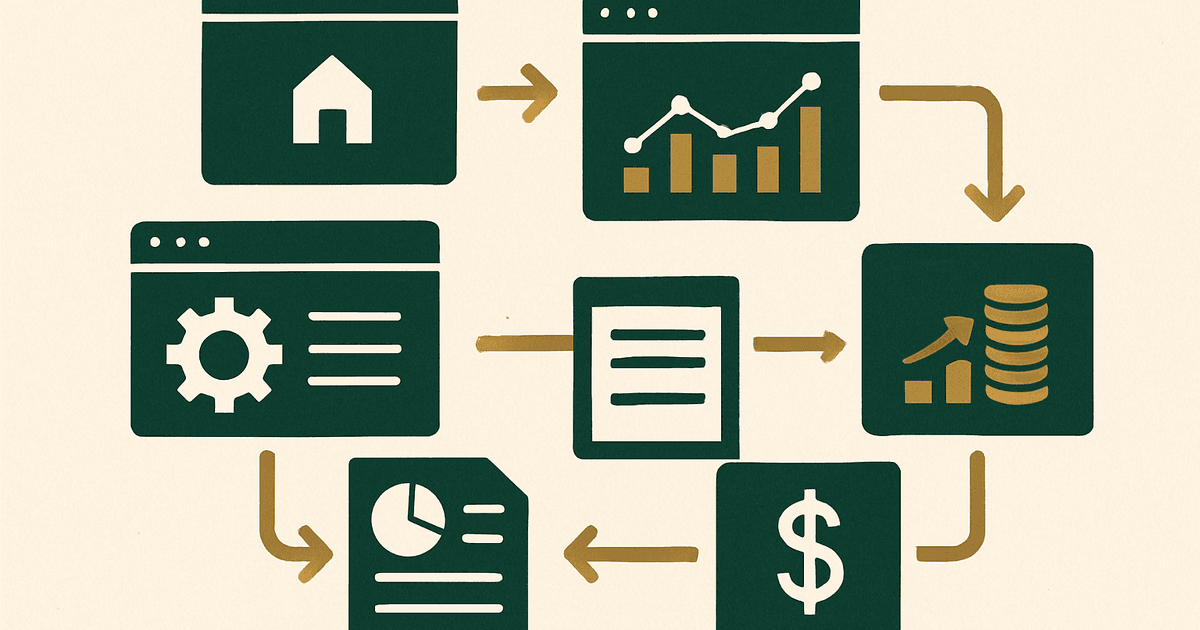
The basic model is simple: you buy based on trailing monthly profit, traffic durability, and downside risk; you sell based on improved profit, cleaner systems, and reduced buyer uncertainty. As of 2026, approximately, small content sites and simple SaaS-adjacent content assets often trade on monthly multiples, while larger businesses may be framed with annualized valuation logic and broker-led processes. The spread between a mediocre asset and a polished one is where the profit usually lives.
How to flip websites: the model that actually works
Website flipping is not just buying low and selling high. Buyers pay more for stable earnings, diversified traffic, clean analytics, simple operations, and a believable growth story. That means the best flips usually are not full rebuilds. They are operational upgrades: fixing weak monetization, pruning dead pages, tightening internal links, improving RPM, raising affiliate conversion, standardizing content templates, and documenting SOPs.
- Buy assets with clear, fixable problems rather than mystery problems.
- Prioritize sites with existing traffic and revenue over purely speculative builds.
- Improve one or two high-impact levers first: monetization, SEO structure, or conversion.
- Track every change against revenue, traffic quality, and time required to operate the site.
- Sell when the site is cleaner and more predictable, not when you are merely tired of it.
In other words, the goal is not to become emotionally attached to the website. The goal is to create an asset that a future buyer can understand in 30 minutes and operate in 3 hours per week.
What kinds of websites are best for flipping?
The best website flipping targets are usually boring, understandable, and already monetized. Content sites with search traffic, affiliate sites with stable buyer intent, simple tools with SEO pages, and small communities with obvious monetization gaps are generally easier to underwrite than trend-driven media sites or businesses dependent on one viral social account.
| Site type | Why flippers like it | Main risk | Typical improvement angle |
|---|---|---|---|
| Content site | Predictable traffic and monetization options | SEO volatility | Improve ad setup, update content, internal linking |
| Affiliate site | High upside from buyer-intent pages | Program dependency | Diversify offers, improve rankings and CRO |
| Tool plus content site | Multiple monetization paths | Higher technical complexity | Fix onboarding, build comparison pages, add email capture |
| Small ecommerce content hybrid | Revenue can be easier to justify | Operations and inventory burden | Raise conversion, simplify catalog, improve AOV |
| Community/forum asset | Strong moat when real users return | Moderation and churn | Clean UX, add sponsorships, email and premium layers |
For most operators, content sites are the cleanest entry point. They are easier to evaluate than custom apps, usually simpler to monetize, and easier to resell if traffic and earnings are documented properly.
How websites are valued before you buy
Most website flipping deals start with monthly net profit, then adjust for quality. As of 2026, approximately, smaller content and affiliate sites commonly sell in roughly the low- to mid-30x monthly profit range, while stronger assets with diversified traffic, cleaner operations, and better history can trend higher. Riskier assets, declining sites, or businesses with weak documentation may trade lower. Exact pricing varies by niche, geography, monetization mix, and season.
Profit is only the starting point. A buyer will discount for concentration risk, unstable SEO, policy-sensitive monetization, thin content, owner dependency, poor accounting, and traffic that does not convert. Use a structured framework instead of a headline multiple. For a deeper breakdown, review website valuation methods.
Roughly $75,000–$105,000 at typical 2026 multiples
| Factor | Pushes value up | Pushes value down |
|---|---|---|
| Revenue quality | Diverse sources, stable history | One source, sharp recent spikes |
| Traffic quality | Search plus direct/email, steady trends | One country, one keyword cluster, social spikes |
| Operations | SOPs, low hours, contractor-ready | Founder-only knowledge, messy workflows |
| Content quality | Updated, original, scalable templates | Thin, outdated, overlapping pages |
| Compliance | Clean policies and ad-friendly setup | Manual actions, DMCA, ad policy risk |
| Growth story | Specific and credible upside | Generic 'do more SEO' promise |
Where to buy and sell websites
Where you buy matters because the quality of listings, seller sophistication, and diligence support all change the risk profile. Marketplaces are broad and fast. Brokers are more curated and usually better once deal size rises.
Flippa is often the first place people look because it has a wide range of small sites, starter projects, and established assets. That breadth is useful, but it also means you need better filters and tighter diligence. If you are evaluating that marketplace specifically, read our Flippa review before making offers.
- Marketplaces: broad deal flow, more variance in quality, better for smaller acquisitions.
- Brokered deals: more screening, usually more documentation, better for larger or more established assets.
- Private outreach: potentially best pricing, but more work and fewer protections.
- Founder communities: sometimes good off-market opportunities if you can move quickly.
Due diligence checklist before you buy
Most losses in website flipping come from weak diligence, not weak execution. If you buy a site with artificial traffic, unstable rankings, or expenses the seller conveniently omitted, your margin disappears quickly. Verify everything independently.
- Confirm revenue with direct screenshots plus read-only access where possible.
- Match claimed profit against bank, network, or platform statements.
- Review at least 12 months of traffic trends in analytics and search console.
- Check whether top pages and top queries are concentrated too narrowly.
- Look for recent traffic cliffs, seasonal spikes, and suspicious referral sources.
- Audit backlink quality at a high level for obvious spam or paid-link patterns.
- Review content originality, update cadence, and AI/thin-page risk.
- Check ad policy, copyright, trademark, and privacy compliance issues.
- Verify all important accounts can be transferred cleanly.
- Estimate the true owner workload, including editorial, tech, and support.
What to improve after you acquire a site
The first 30 to 90 days should focus on upgrades that raise profit without introducing new fragility. This is where many flippers overcomplicate things. You usually do not need a redesign, a brand overhaul, or a content strategy reset on day one. You need to fix the money leaks.
1. Tighten monetization first
If the site runs display ads, improving ad monetization can move earnings quickly. As of 2026, approximately, Google AdSense remains the common starter network; Ezoic is often used by growing publishers; Monumetric typically fits sites that have moved beyond entry-level traffic; Mediavine and Raptive generally sit at the premium end with higher traffic and quality thresholds. Eligibility and requirements change, but those tiers are the rough landscape.
On RPMs, be careful with simplistic benchmarks. Content-site display RPMs can range from low single digits to much higher double digits depending on niche, geography, and season. Finance, software, and B2B-adjacent audiences often command more than broad entertainment or low-value global traffic, but results vary by niche, geography, and season.
- Test whether the current ad network matches the site's traffic level and geography.
- Improve ad viewability and layout without destroying UX.
- Fix low-value traffic pages that create impressions but little revenue.
- Add or optimize affiliate blocks on buyer-intent pages where relevant.
- Audit email capture and owned-audience opportunities.
2. Refresh pages that already have traction
The fastest SEO gains often come from updating existing winners. Improve titles, intros, internal links, comparison tables, FAQs, and on-page intent alignment. Consolidate overlapping articles. Add missing commercial and informational support pages around categories that already rank.
3. Reduce operational chaos
A site with messy processes sells for less. Document publishing workflows, affiliate link management, ad setup, update schedules, and contractor instructions. Standardization makes earnings more transferable, and transferability is a valuation lever.
Simple website flipping math
A workable flip usually has three drivers: entry multiple, profit growth, and resale multiple. If you buy at a reasonable price, increase monthly profit materially, and remove enough risk that the exit multiple holds or improves, the spread can be attractive. If you overpay, growth has to do all the work.
| Scenario piece | What matters |
|---|---|
| Entry price | Did you buy off current profit or off hype? |
| Improvement cost | Content, design, engineering, and contractor spend |
| Holding period | Enough time to show stable post-change performance |
| Exit multiple | Improved by diversification, documentation, and cleaner trends |
| Net profit at sale | The main lever most buyers care about |
Do not model a flip based on best-case assumptions. Use conservative traffic expectations, account for content and technical costs, and leave room for market softness. Buyers are more skeptical when a site has only one or two strong months after changes.
Common mistakes that kill website flipping profits
- Buying on revenue instead of net profit.
- Trusting screenshots without independent verification.
- Assuming all search traffic is equally valuable.
- Ignoring how dependent the site is on one page or one program.
- Spending months on a redesign instead of monetization fixes.
- Adding too many experiments at once and losing attribution.
- Listing the site before operational cleanup is finished.
- Expecting a premium multiple without documentation.
One of the biggest mistakes is confusing growth potential with present value. Buyers may appreciate upside, but they usually pay more for proven, documented improvements than for theoretical opportunities.
When to hold versus when to sell
You should usually sell when the site has reached a cleaner, more stable state and your next dollar of effort would likely earn a better return elsewhere. If the site still has obvious fixes that are inexpensive and fast, keep going. If most of the remaining upside is speculative or labor-heavy, selling often makes sense.
- Hold if recent improvements are compounding and risk is still dropping.
- Hold if you have clear, low-cost monetization upgrades left.
- Sell if the site now depends less on you and is easier for a buyer to run.
- Sell if your capital can be recycled into a better spread on the next acquisition.
- Sell if concentration risk is starting to increase again.
How to prepare a website for sale
When you decide to exit, package the asset like a buyer will inspect every claim—because they will. Prepare a clear profit and loss view, a traffic summary, top-page revenue breakdowns, a list of revenue sources, operating procedures, contractor relationships, and transfer notes. Make the business feel transferable.
- Clean up analytics and ensure naming is understandable.
- Document monthly expenses clearly and consistently.
- Prepare a simple narrative of what changed during your hold period.
- Show which pages and channels drive most revenue.
- Explain risks honestly and pair them with mitigation steps.
- Create SOPs for publishing, monetization, and maintenance.
- Be ready for a migration and transition period after closing.
If you are moving into larger deals or want more guided exit support, compare the best website brokers. And if you are still building your monetization baseline before flipping, revisit our display ad guide.
How much money do you need to start flipping websites?
Is website flipping still profitable in 2026?
What is a good multiple for a website?
How long does it take to flip a website?
What is the biggest risk when buying websites?
Get the next guide by email
One practical email when we publish.