
How to Improve Your Affiliate Conversion Rate
Improve affiliate conversion rate with practical fixes for traffic, intent, CTR, trust, and testing that lift clicks and sales.
To improve affiliate conversion rate, start by matching the offer to search intent, then fix the page elements that usually leak sales: weak comparison structure, buried calls to action, low trust, and slow pages. If your traffic is decent but revenue is flat, the issue is usually not "more visitors" but "better pre-click and post-click alignment." This guide focuses on the practical changes that move affiliate conversion without guesswork. If you need the bigger strategy first, start with affiliate monetization.

The fastest wins usually come from improving commercial-intent pages, not informational pages that were never meant to send buyers. That means tightening your reviews, comparisons, and "best" pages, especially the ones already getting search traffic. A strong example is a product roundup supported by individual review pages; if you have thin review content, this is a good time to strengthen it with a proper affiliate review content structure.
What actually improves affiliate conversion rate
Affiliate conversion is a chain: the visitor has a problem, lands on a page, decides whether to trust your recommendation, clicks the affiliate link, and then decides whether to buy on the merchant site. You control the first half directly and influence the second half indirectly. In practice, that means your job is to pre-sell well enough that the click is qualified, not merely high-volume.
- Match page type to intent: review, comparison, alternatives, or best-for use case.
- Reduce friction before the click with clear summaries, specs, and decision help.
- Increase affiliate click-through rate with better placement, copy, and button hierarchy.
- Build trust with firsthand detail, transparent tradeoffs, and obvious editorial logic.
- Send traffic to merchants that convert reasonably well for your audience.
Start with intent before you touch buttons
Most sites try to improve affiliate conversion rate by changing button color or link text first. Sometimes that helps, but it is usually a second-order gain. The bigger question is whether the page matches what the visitor wanted when they searched. Someone searching "best email marketing tools for nonprofits" needs a different page than someone searching "ConvertKit pricing" or "Mailchimp alternatives."
| Query type | User intent | Best page format | Conversion potential |
|---|---|---|---|
| best X for Y | Compare options and choose | Roundup or comparison | Typically strong |
| X review | Validate one product before buying | In-depth review | Typically strong |
| X vs Y | Make a final shortlist decision | Versus page | Often very strong |
| how to do X | Learn a process | Tutorial with soft recommendations | Usually lower unless tightly aligned |
| X pricing | Check cost before purchase | Pricing explainer or review section | Can be strong if timely and accurate |
If the content format does not match the intent, conversion usually suffers even when rankings are good. A tutorial can monetize, but informational traffic often converts lower than high-commercial pages. The fix is simple: identify pages already getting impressions and clicks, then map each page to the clearest buyer intent. If the intent is commercial, structure the article like a buying decision page, not a blog post.
Improve affiliate click-through rate first
You cannot get more affiliate sales without qualified clicks. On most sites, affiliate click-through rate is easier to improve than the merchant's checkout conversion rate because your page is under your control. Small layout changes can have meaningful impact when the offer is already relevant.
- Place a clear recommendation summary near the top for impatient visitors.
- Add jump links to comparison tables, verdicts, pros and cons, and pricing sections.
- Use one primary call to action per product block instead of several competing links.
- Put affiliate links after useful context, not before the visitor understands the recommendation.
- Repeat calls to action naturally after major decision points: summary, comparison, and final verdict.
- Use descriptive anchor text that reflects the next step, such as checking price, viewing features, or starting a trial.
Use comparison tables the right way
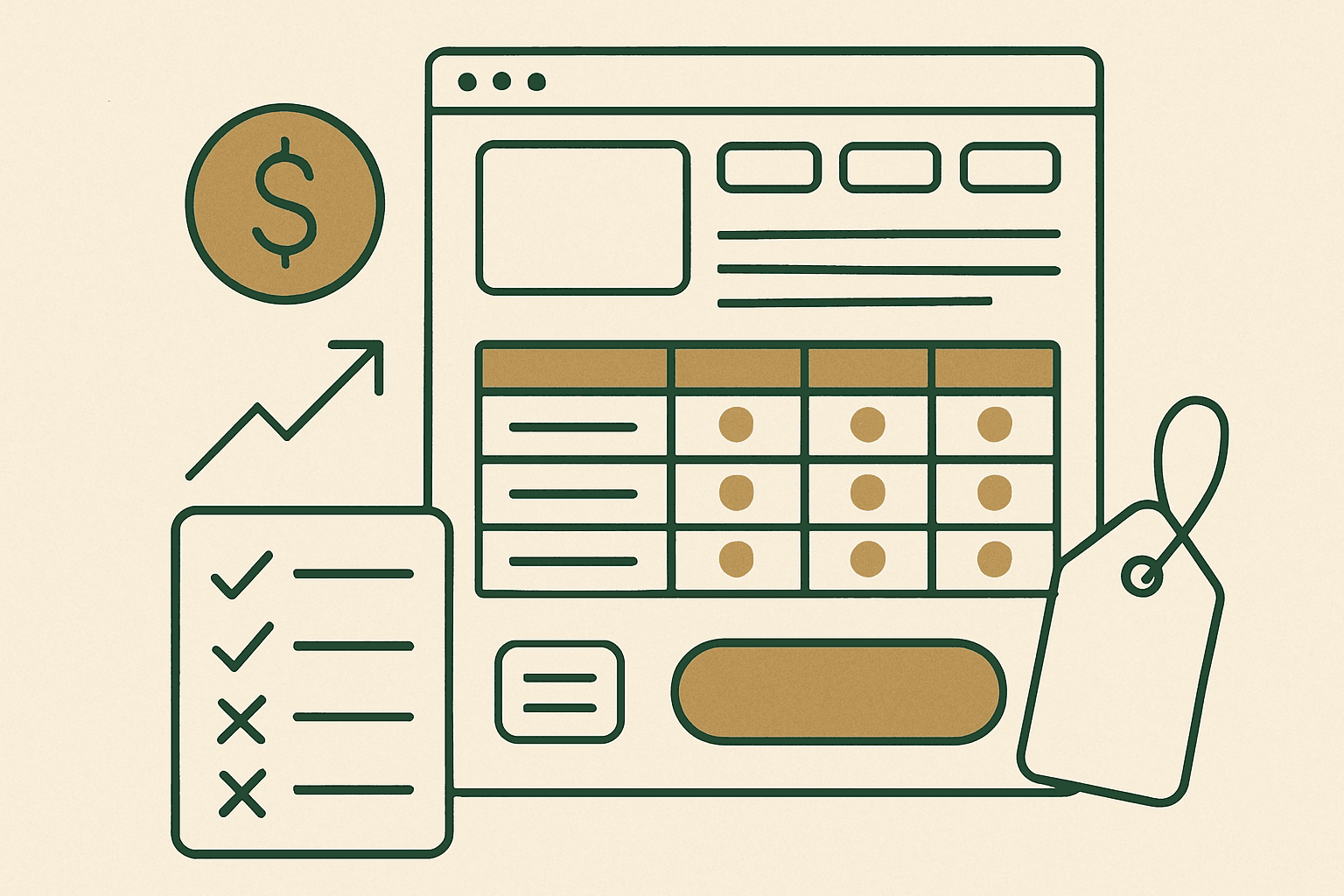
Comparison tables work because they compress decisions. They are especially useful on "best," "alternatives," and "vs" pages. But a table only helps if it reflects the criteria buyers care about. Generic columns like "features" are weaker than concrete criteria such as starting price, free trial, integrations, support quality, setup difficulty, or best fit.
Keep the table scannable. Then immediately follow it with short recommendation blocks that explain who each product is for and who should avoid it. That combination tends to improve affiliate conversion because it filters low-fit clicks and increases confidence among high-fit visitors.
Build trust before asking for the click
Trust is the difference between traffic and revenue. Visitors can tell when a page exists only to push them off-site. The pages that convert best usually show evidence of evaluation, clear tradeoffs, and enough specificity that the recommendation feels earned.
- Explain why a product is the best fit for a specific use case, not just generally "the best."
- Include downsides and limitations instead of pretending every option is ideal.
- Show decision criteria consistently across products.
- Keep pricing and feature statements updated.
- Separate editorial judgment from marketing language.
This is also where disclosure matters. A straightforward affiliate disclosure usually helps more than it hurts because it removes ambiguity. It signals that your recommendations are monetized but still evaluated. Readers are generally fine with affiliate links when the content is genuinely useful.
Make the page easier to scan and decide
A lot of affiliate pages fail because they make decision-making harder than it needs to be. The visitor has to hunt for the verdict, pricing, limitations, and best use case. When that happens, they bounce, return to search, or click to a competitor's page that is simply easier to read.
- Add a short verdict box near the top.
- Use clear H2 and H3 subheads for use cases, pricing, pros and cons, and alternatives.
- Keep paragraphs tight around decision-heavy sections.
- Use bullets where readers compare facts quickly.
- Avoid popups and intrusive elements near affiliate CTAs.
Choose merchants and programs that convert well
Some conversion problems are page problems. Others are merchant problems. If one program consistently underperforms despite qualified traffic, the issue may be the destination: weak landing pages, poor mobile experience, aggressive upsells, limited geography support, or low brand trust.
This matters more than many publishers realize. A merchant with a slightly lower commission rate can still earn more if it converts better. On the content side, your job is to test whether readers respond better to free trial offers, demo requests, discount language where allowed, or direct pricing-page clicks.
If you also run display ads, keep the tradeoff in mind. For many publishers, display RPM from networks like AdSense, Ezoic, Monumetric, Mediavine, or Raptive is easier to predict once traffic scales, but affiliate earnings can exceed ads significantly on strong buyer-intent pages. As of 2026, approximately, display ad RPMs can range from low single digits to much higher double digits depending on network tier and niche, while affiliate revenue per thousand visitors varies by niche, geography, and season even more dramatically.
Use content formats that pre-sell better
Not all affiliate page types convert equally. If you want to improve affiliate conversion rate, concentrate on formats that help readers make a decision quickly.
| Content format | Best use | Why it converts |
|---|---|---|
| Best-of roundup | Broad commercial queries | Captures comparison intent and supports multiple offers |
| Single product review | Branded product research | Builds confidence before a purchase |
| Versus page | Decision-stage visitors | Often reaches users close to buying |
| Alternatives page | Users unhappy with current option | Strong intent with clear replacement mindset |
| Tutorial with recommendation | Informational traffic | Works when the tool is tightly tied to the task |
When a page underperforms, ask whether it should be recast into a higher-converting format. A general article may rank, but a dedicated comparison page often monetizes better because it matches the reader's decision stage.
Test the variables that matter most
You do not need enterprise CRO tooling to improve affiliate conversion. You need a disciplined test order. Start with changes that affect intent-match and decision clarity, then move to placement and copy. Cosmetic tweaks come later.
- Test page angle: best-for persona, alternatives, or versus framing.
- Test recommendation order in roundups.
- Test placement of the first CTA and first comparison table.
- Test CTA copy based on next-step intent.
- Test shorter versus more detailed verdict summaries.
- Test merchant destination where multiple programs exist.
Measure changes using click-through rate, outbound click quality, earnings per session, and earnings per thousand pageviews. If possible, track performance by device. Mobile pages often need more aggressive simplification because long preambles and clutter hurt affiliate click-through rate faster on small screens.
Roughly $2,430–$4,050/mo in commissions at this intent
If you want to estimate the revenue impact of better CTR or higher conversion, model it before rewriting dozens of pages. A small increase in qualified clicks can produce a meaningful lift in earnings once applied across your top commercial URLs. For benchmarking the bigger upside, see what affiliate marketing earnings can look like.
Fix the technical leaks that quietly hurt conversion
Technical issues rarely create the whole problem, but they often reduce the upside of otherwise strong pages. Slow load times, layout shift, broken comparison tables on mobile, and aggressive ad density can all hurt trust and clicks.
- Check that affiliate buttons and tables are usable on mobile.
- Reduce layout shift around product blocks and ads.
- Make sure links are clearly tappable and not crowded.
- Keep pages fast enough that visitors reach the recommendation before bouncing.
- Update outdated pricing, screenshots, and feature claims regularly.
Know what good looks like
There is no universal "good" affiliate conversion rate because merchant quality, niche, traffic source, and offer type vary so much. The more useful benchmark is trend direction on your own pages. If click-through rate rises but earnings do not, the merchant or offer fit may be weak. If rankings rise but clicks do not, your page may not be helping visitors decide. If clicks rise and earnings per click improve, you are usually on the right track.
As of 2026, approximately, affiliate earnings and effective RPM ranges vary by niche, geography, and season. Software, finance, and business services can sometimes support much higher revenue per thousand visitors than broad consumer content, while low-intent informational traffic often monetizes much lower. That is why page intent and offer fit matter more than headline averages.
A simple workflow to improve affiliate conversion rate
- Pull your top traffic pages with affiliate links.
- Sort by pages with strong traffic but weak revenue per session.
- Confirm search intent for each query set.
- Rewrite the top section to help the visitor decide faster.
- Add or improve comparison tables, verdict boxes, and pros and cons.
- Tighten CTA placement and anchor text.
- Review merchant fit and destination quality.
- Measure CTR, earnings per session, and page-level affiliate revenue after changes.
That process is usually enough to uncover the main bottleneck. Most sites do not need more affiliate links. They need better alignment between the search, the page, the recommendation, and the destination. If you want to scale beyond one-off fixes, tie this workflow into your broader affiliate revenue strategy so new pages are built to convert from the start.
What is a good affiliate conversion rate?
How can I improve affiliate click-through rate without being pushy?
Why am I getting clicks but few affiliate sales?
Do product reviews or comparison pages convert better?
Should I add more affiliate links to increase conversions?
Get the next guide by email
One practical email when we publish.