
Taxes When Selling a Website (2026)
Taxes when selling a website: how deals are typically taxed, asset allocation, and what to ask your CPA before closing.
The short answer on taxes when selling a website: most website exits are structured as asset sales, and your final tax bill depends on what exactly is being sold, how the purchase price is allocated, how long you owned the assets, and your entity and country/state tax situation. For most site owners, the big issue is not just whether the sale creates capital gains, but whether parts of the deal are treated as ordinary income. Before you list, get familiar with the moving parts in selling and flipping websites so you do not give away tax efficiency in the LOI.

How website sales are usually taxed
In practice, a website sale is usually not taxed as one single blob. The IRS-style analysis generally breaks the transaction into separate assets: the domain, content library, code, email list, customer relationships, trademarks, operating procedures, social accounts, and goodwill. The buyer and seller then allocate the total purchase price across those buckets in the asset purchase agreement or a related allocation schedule.
That allocation matters because different asset classes can be taxed differently. Some portions may qualify for capital gain treatment, while others may create ordinary income or depreciation recapture. If you remember only one thing, remember this: the tax result follows the asset allocation more than the label on the listing.
- A pure content site sale often includes domain, content, basic code/theme customizations, email list, and goodwill.
- A SaaS or tool-led site sale may add software code, customer contracts, subscriptions, and sometimes deferred revenue issues.
- An ecommerce content hybrid may include inventory, trademarks, supplier relationships, and marketplace accounts, which adds more tax complexity.
Asset sale vs stock sale
Most smaller website deals are asset sales, not stock sales. In an asset sale, the buyer purchases selected business assets rather than buying the legal entity itself. Buyers usually prefer this because it can reduce inherited liabilities and let them step up the tax basis of acquired assets.
A stock sale or entity sale is different: the buyer acquires the company ownership interests. Sellers sometimes prefer stock sales because the tax treatment can be simpler or more favorable in some cases, but many buyers push back unless the business is larger, cleaner, and has strong books, contracts, and compliance. For the average content site or niche website, assume an asset sale unless your advisor says otherwise.
| Structure | What buyer gets | Typical seller tax impact | Common in website deals? |
|---|---|---|---|
| Asset sale | Selected assets like domain, content, code, list, goodwill | Mixed treatment depending on allocation; some capital gain, some ordinary income can apply | Yes, most commonly |
| Stock/entity sale | Ownership of the legal entity | Can be simpler in some cases, but depends on entity type and jurisdiction | Less common for smaller sites |
Which parts of a website sale may be capital gains?
This is where the phrase capital gains website sale gets oversimplified. Some assets in the sale may be treated as capital assets or Section 1231-style business assets, while others may not. The details depend on your tax jurisdiction, how the asset was created or acquired, your entity type, your holding period, and whether prior deductions create recapture.
As a practical rule, sellers often want more value allocated to assets that are more likely to produce favorable gain treatment, such as goodwill in some fact patterns. Buyers may prefer allocations that give them faster amortization or deduction benefits. That is why tax negotiation starts before closing, not after.
- Goodwill may receive favorable treatment in some sales, depending on the facts.
- A domain name may not be taxed the same way as an email list or customer contracts.
- Previously depreciated or amortized assets can trigger recapture, which may be taxed less favorably.
- Services, consulting, transition support, or a non-compete payment may be taxed as ordinary income.
The asset allocation buckets that usually matter most
Every deal is different, but these are the buckets I see matter most in website sale tax planning. You do not need to become a tax expert, but you do need to understand enough to spot where the economics change.
| Asset bucket | Examples in a website deal | Why it matters for tax |
|---|---|---|
| Domain name | Primary site domain and related domains | May have different treatment from self-created content or services |
| Content library | Articles, images, downloadable assets, editorial database | Creation costs, prior deductions, and ownership chain can matter |
| Software/code | Custom plugins, internal tools, site codebase, app features | Prior amortization or development treatment can affect tax result |
| Email list and customer data | Subscribers, CRM records, lead database | Often allocated separately in asset deals |
| Trademarks/brand | Brand name, logos, trade dress, social handles | Can be valuable and separately identified |
| Goodwill/going concern value | Traffic reputation, brand momentum, operating know-how | Often a major negotiation point for seller and buyer |
| Non-compete | Agreement not to launch a competing site | Frequently less favorable for sellers than goodwill |
| Transition services | Training, handoff support, consulting after close | Typically treated more like ordinary income |
Why website sale tax often surprises founders
The common surprise is that founders assume the full sale price will be taxed as long-term capital gain. That is often too simplistic. If your deal includes earnouts, consulting, a seller note, a transition package, or a non-compete, some of that value may be taxed differently than the base asset sale.
Another surprise is state and local tax. Even if the federal-level treatment looks manageable, your state of residence, the business entity's filing position, and multi-state operations can change the net number meaningfully. International sellers have an extra layer of withholding, treaty, residency, and cross-border structuring issues.
Earnouts, seller financing, and installment treatment
Many website deals are not 100% cash at close. The purchase agreement may include an earnout tied to traffic or profit targets, a promissory note, or installment payments over time. That can affect when income is recognized and how much uncertainty sits in the tax reporting.
Installment-style treatment can help with cash flow in some cases, but it also creates risk: if the buyer underperforms, disputes the earnout, or defaults on a note, your tax expectations and actual cash received may diverge. This is one reason I prefer simple deals when the pricing is close. Clean structure usually beats clever structure.
- Cash at close is simplest from a certainty standpoint.
- Seller notes spread receipt over time but add collection risk.
- Earnouts can increase upside, but they also complicate tax reporting and negotiations.
- Your CPA should review timing issues before you sign the LOI, not after.
Entity type changes the answer
Your entity matters a lot. A sole proprietor selling website assets, a single-member LLC, an S corporation, and a C corporation can all reach different tax outcomes on the same headline sale price. Some structures also create an extra layer of tax on a sale, especially if funds must move from the company to the owner.
If you are operating a meaningful web business and have not thought about exit tax at all, fix that before you go to market. Entity cleanup, contract assignment, IP ownership cleanup, and clean bookkeeping can improve both valuation and tax efficiency. That is one reason I would tighten operations before listing using a checklist like getting your website ready for sale.
How to estimate the sale value before tax planning
You cannot plan taxes well if you have no realistic idea of sale price. Website valuations are usually based on a multiple of monthly profit or seller's discretionary earnings, but the right multiple varies by traffic quality, concentration risk, growth, monetization mix, and operational complexity.
Roughly $75,000–$105,000 at typical 2026 multiples
Use the calculator to sanity-check a likely valuation range, then have your tax advisor model net proceeds under different structures. A deal that looks better on gross price is not always better on after-tax cash.
Questions to ask your CPA before accepting an LOI
- Is this likely to be an asset sale or an entity sale, and what does that mean in my case?
- Which assets in my website business are most likely to receive favorable gain treatment, and which may produce ordinary income?
- How should we think about goodwill, non-compete, transition services, and consulting payments?
- Do prior deductions, amortization, or depreciation create any recapture issues?
- How should seller financing, installment payments, or earnouts be handled?
- What state, local, or cross-border tax issues apply to me?
- Should I make any entity, bookkeeping, or documentation changes before going to market?
How brokers and deal structure can affect taxes
A good broker is not a substitute for a CPA, but the right broker can help keep the LOI and purchase agreement commercially realistic. That matters because tax problems often start with sloppy deal terms: vague asset definitions, no allocation discussion, oversized non-compete value, unclear consulting obligations, or a badly structured earnout.
If you are comparing marketplaces and M&A advisors, review the best website brokers with one eye on deal quality, not just list price promises. Better process usually means fewer unpleasant surprises in diligence and closing.
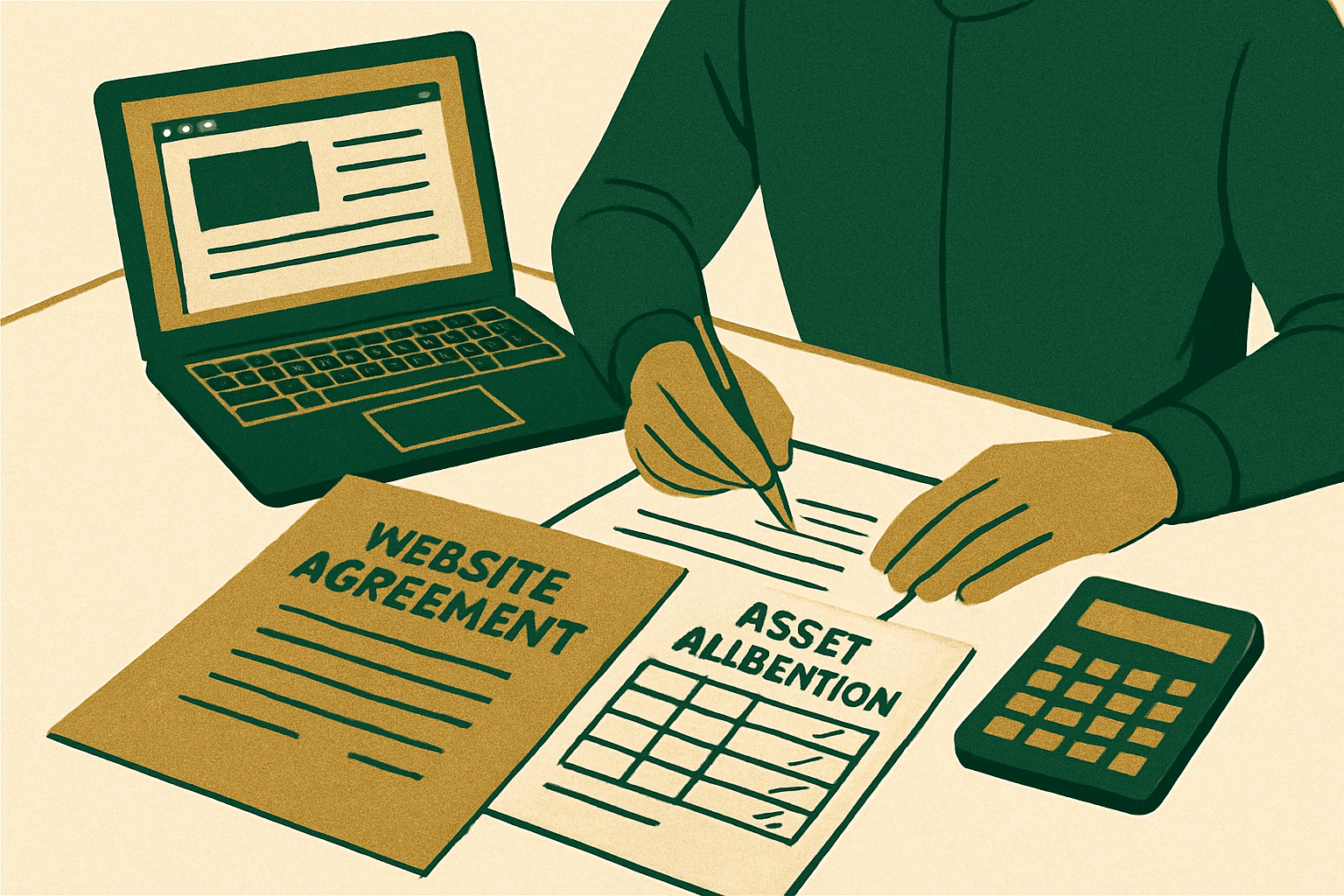
A practical pre-close checklist for website sale tax planning
- Confirm who legally owns the domain, content, code, and brand assets being sold.
- Separate business and personal expenses so earnings and basis records are cleaner.
- Document major development, acquisition, and branding costs if relevant.
- Review prior amortization or depreciation schedules with your accountant.
- Get a draft purchase price allocation before final signing, not after.
- Model after-tax outcomes for all-cash, seller-note, and earnout structures.
- Review state and international filing issues if you moved or operate remotely.
- Make sure the APA, bill of sale, and closing statement are all consistent.
What I'd keep in mind before you sell
If you are within 6 to 12 months of a likely exit, do not treat taxes as a last-week paperwork issue. Website sale tax planning is really deal-structure planning. The cleaner your books, the clearer your asset ownership, and the earlier you review allocation and entity questions, the better your odds of keeping more of the proceeds.
If you are still early in the process, start from the broader playbook on selling websites profitably, then bring in a CPA before you negotiate final allocation language. That is usually where the real money gets protected.
Do you pay capital gains tax when selling a website?
Is selling a website considered an asset sale?
How can I reduce taxes when selling a website?
Are earnouts from a website sale taxed differently?
Should I talk to a CPA before listing my website for sale?
Get the next guide by email
One practical email when we publish.