
How to Launch a Digital Product (2026 Playbook)
Learn how to launch a digital product in 2026 with pricing, validation, platform, funnel, and post-launch steps that actually convert.
If you want the short version of how to launch a digital product, it’s this: validate demand before you build too much, pick one clear outcome, price for the transformation, put a simple checkout and email funnel in place, and launch to an audience you already control. For most site owners, digital products become materially more attractive once ad revenue alone starts to feel capped. That’s why I usually think about products alongside display ad monetization, not as a replacement for ads but as the next layer of revenue.
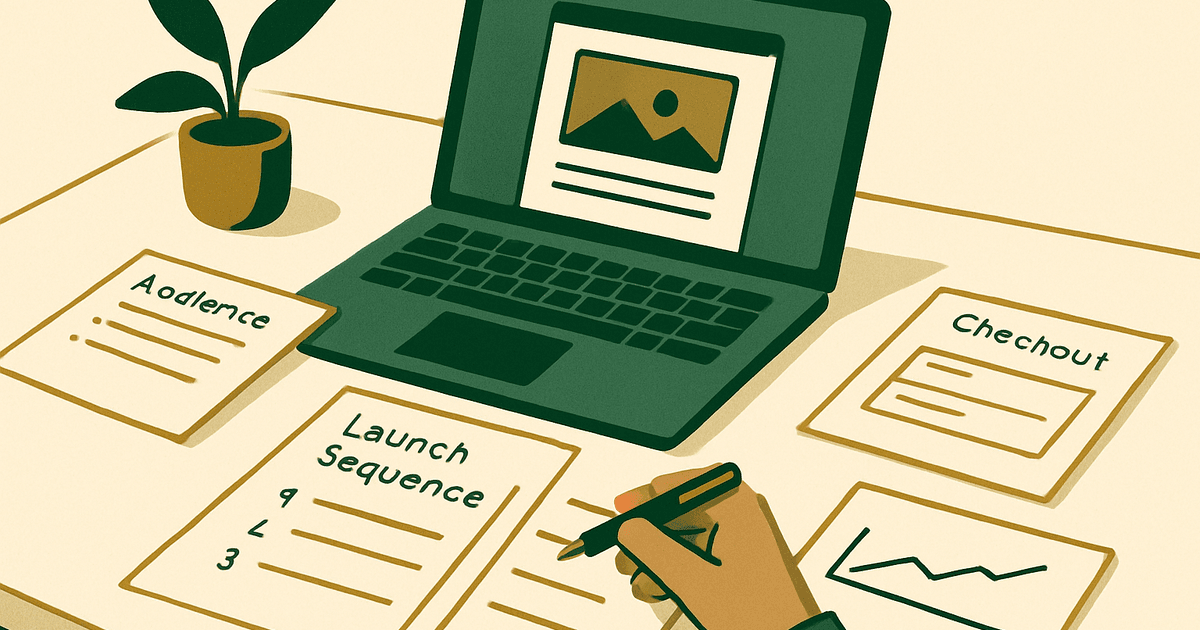
The mistake I see most often is treating a launch like an event instead of a system. A good product launch is really four things working together: audience fit, offer fit, checkout fit, and follow-up. If one breaks, the launch underperforms even if the product itself is solid.
How to launch a digital product without wasting months
Start narrower than you think. The best-performing digital products usually solve one painful, specific problem for one specific audience segment. A broad promise like “grow your business” is hard to sell. A specific promise like “build a sponsor-ready media kit in one afternoon” is much easier to message, price, and convert.
- Pick one audience you already reach: email subscribers, returning readers, community members, or customers.
- Define one concrete outcome the buyer can get within days or weeks, not months.
- Choose the lightest product format that can deliver that outcome: template, spreadsheet, checklist, swipe file, mini-course, premium guide, audit, or toolkit.
- Pre-sell or soft-validate before building the full version.
- Launch with a simple funnel first; add complexity only after you see conversion data.
Validate demand before you build
Validation matters more than production quality in the early stage. A polished product nobody wants is still a miss. A lightweight product that solves a real problem can sell immediately and give you the data to improve version two.
The practical test is simple: can you get real signals of intent before the full build? That can mean waitlist signups, survey responses from existing readers, reply-based interest from your email list, consulting calls where the same problem keeps coming up, or a pre-order page with a clear promise and delivery timeline.
| Validation method | What it tells you | Good use case | Limitation |
|---|---|---|---|
| Email survey | What people say they want | Finding pain points and language | Interest does not always equal purchases |
| Waitlist page | Top-of-funnel interest | Testing positioning and headline clarity | Weak signal if traffic is low quality |
| Pre-sale | Actual buying intent | Testing demand fast | Requires trust and clear delivery expectations |
| Service-to-product bridge | What buyers will pay for | Turning repeated client work into a product | Can bias product toward edge cases |
| Audience interviews | Deeper objections and desired outcomes | Sharpening offer and messaging | Small samples can mislead if not representative |
Choose the right digital product format
You do not need to launch with a course. Courses are often overbuilt and slow to update. In many niches, the highest-leverage first product is a simpler asset that gets the buyer to the result faster.
- Templates: strong when buyers want speed and done-for-you structure.
- Spreadsheets and calculators: effective when decisions, forecasting, or prioritization are the pain point.
- Premium guides: useful when expertise and process matter more than software.
- Mini-courses: good when the buyer needs a sequence and context, but not a huge curriculum.
- Toolkits or bundles: good when multiple assets together remove friction.
- Membership or library access: better once you already know what users repeatedly want.
A good rule: pick the format that minimizes time-to-outcome for the buyer and time-to-launch for you.
Build the offer before you build the product
Your offer is not just the file or course. It’s the combination of promise, audience, format, bonuses, risk reversal, and positioning. Two similar products can perform very differently because one has a much stronger offer.
- Who it is for
- What exact outcome it delivers
- How quickly the buyer can use it
- What is included and not included
- Why this is better than free alternatives
- What objections need to be answered on the page
This is also where differentiation matters. If your niche is crowded, don’t compete by adding more modules or more pages. Compete on specificity, speed, implementation help, curation, or a clearer fit for a defined segment.
Price the product so the launch can work
A weak pricing decision can sink an otherwise good launch. Too low, and you attract low-intent buyers while making it hard to buy traffic, recruit affiliates later, or justify support. Too high, and your page needs more trust, proof, and buyer readiness.
I’d set pricing after looking at buyer outcome, urgency, replacement for services or labor, and how warm your audience is. If you need a deeper framework, see pricing digital products for packaging and pricing structure.
| Product type | Common launch price range | Works best when | Main risk |
|---|---|---|---|
| Template or checklist | Approximately $9–$49 | The value is immediate and implementation is simple | Can feel too generic if outcome is vague |
| Spreadsheet or calculator | Approximately $19–$99 | The buyer saves time or avoids expensive mistakes | Needs clear examples to show value |
| Premium guide or playbook | Approximately $29–$149 | Your expertise is the product and the problem is specific | Can be compared to free content unless differentiated |
| Mini-course | Approximately $49–$299 | The buyer needs sequence, explanation, and examples | Takes longer to build and maintain |
| Bundle or toolkit | Approximately $99–$499 | Multiple assets together create a clear shortcut | Can become bloated if not tightly scoped |
These ranges are typical, not universal. What converts varies by niche, buyer sophistication, traffic source, and how expensive the underlying problem is.
Set up the minimum launch stack
Most launches do not need complicated software. You need a product page, checkout, email capture, delivery, analytics, and a basic follow-up sequence. That’s the minimum viable launch stack.
As of 2026, approximately, common platform choices for digital products include all-in-one product platforms and simpler checkout-first stacks. The right choice depends less on features and more on your current constraints: speed, ownership, fees, and how much customization you actually need.
- Sales page: one page with a strong headline, who it’s for, what’s included, objections, and CTA.
- Checkout: make purchase friction low; do not force unnecessary account creation if you can avoid it.
- Email capture: a waitlist, lead magnet, or launch list to follow up with non-buyers.
- Delivery: instant access for simple products, clear onboarding for larger ones.
- Analytics: page views, add-to-cart or checkout starts, purchases, refund requests, and email click data.
Platform selection rules
- If speed matters most, choose the platform that gets you live in days, not weeks.
- If SEO content is your acquisition channel, keep the sales page and supporting content tightly connected to your site.
- If you plan multiple products, think about upsells, bundles, customer accounts, and email integration early.
- If your audience is global, verify payment methods, taxes, and currency handling before launch.
The best setup is usually the one you’ll actually ship. Overengineering the storefront is a classic way to delay the launch.
Write a sales page that matches buyer intent
Your product page should answer the next obvious question at each scroll depth. Above the fold, the buyer wants to know what it is, who it helps, and why it matters. Lower on the page, they want proof, specifics, and reassurance.
- Headline with a clear outcome
- Subhead clarifying who it is for
- Short section on the pain or cost of the status quo
- What’s inside
- How it works
- Who should and should not buy
- Objection handling
- FAQ
- Primary CTA repeated throughout the page
Do not rely on hype. Specificity sells better than excitement alone. Show the mechanism, not just the promise.
Build a simple launch strategy around owned audience
If you already have website traffic, your highest-quality launch channel is usually your owned audience: email subscribers, direct visitors, community members, and existing buyers. Social can help, but it is usually weaker as the primary conversion engine unless you already have strong distribution there.
A practical launch strategy looks like this: warm the audience with problem-aware content, collect interested subscribers, open the cart with a strong offer, follow up with objection-handling emails, and then use post-launch data to improve the evergreen version.
| Stage | Goal | What to send or publish |
|---|---|---|
| Pre-launch | Build problem awareness and segment interest | Audience survey, waitlist page, educational content, teaser email |
| Launch open | Drive first purchases fast | Announcement email, homepage promo, in-content CTAs, social posts |
| Mid-launch | Handle objections and increase confidence | FAQ email, use-case examples, behind-the-scenes explanation |
| Final window | Capture procrastinators | Deadline reminder, bonus expiry, recap of fit and outcome |
| Post-launch | Learn and improve | Buyer onboarding, feedback request, funnel cleanup, page revision |
Use content to support the launch
For site owners, content is usually the leverage point. The best product launches are supported by content that naturally attracts the buyer before they ever hit the sales page. That means tutorials, comparison posts, calculators, case-style walkthroughs, and problem-solution articles tied closely to the product outcome.
This is especially effective when your content has commercial or high-intent informational traffic. A strong article can pre-sell the need, qualify the reader, and move only the right people into the product funnel.
Measure the right launch metrics
A launch feels emotional while it’s happening, so metrics matter. You need enough instrumentation to know whether the issue is traffic quality, offer clarity, pricing, checkout friction, or follow-up.
- Sales page conversion rate
- Checkout start rate
- Checkout completion rate
- Email open and click rates for launch emails
- Refund rate
- Support questions before purchase
- Revenue per visitor and revenue per subscriber
If the page gets clicks but few checkout starts, the offer or pricing may be off. If checkout starts are healthy but completions are weak, the issue is often friction, trust, or payment setup. If buyers request refunds quickly, the expectation set by the page may not match the product experience.
Avoid the launch mistakes that kill conversion
- Building too much before demand is validated
- Making the product too broad for a clear buyer
- Launching without an email list or retargetable audience
- Using generic messaging instead of a specific outcome
- Underpricing to the point where support becomes unworkable
- Choosing a platform that slows down delivery or checkout
- Not answering who the product is not for
- Treating the launch as one email instead of a sequence
- Ignoring post-launch feedback
What happens after the first launch
The first launch is not the finish line. It is where you collect the information needed to make the product durable. After launch, review where buyers came from, which promises resonated, where people dropped, what objections kept appearing, and what support issues repeated.
Then tighten the product. Cut anything that does not help the user reach the promised outcome. Improve onboarding. Add examples where buyers got stuck. Rewrite the sales page using the language actual buyers used in questions and feedback.
Once conversion is consistent, you can decide whether to keep the product evergreen, relaunch periodically, bundle it with related offers, or move buyers into a higher-ticket product ladder.
A practical launch checklist
- Define one audience and one outcome.
- Validate demand with a survey, waitlist, or pre-sale.
- Choose the smallest format that delivers the result.
- Package the offer before building the full asset.
- Set pricing based on outcome, urgency, and buyer sophistication.
- Pick a platform and create a simple checkout flow.
- Write a focused sales page with clear fit and objection handling.
- Build a short email sequence for launch and follow-up.
- Launch to your warmest audience first.
- Review conversion and feedback data, then revise.
If you’re still comparing setup options, the next useful step is reviewing best digital product platforms so you can match your stack to your product type and launch speed.
What is the best way to launch a digital product for the first time?
Should I create the product before I start marketing it?
How long does a digital product launch take?
Do I need a big audience to launch a digital product?
Get the next guide by email
One practical email when we publish.