Email Marketing for Digital Products (2026)
Email marketing for digital products in 2026: funnels, sequences, launch timing, list growth, and realistic benchmarks for creators.
Email marketing for digital products works best when you treat email as your sales system, not just your announcement channel. If you sell templates, courses, downloads, memberships, or software, email is usually the highest-leverage owned channel because you control the audience, the timing, and the offer. It also compounds: one good welcome sequence can keep selling long after a social post disappears. If you’re building your broader product revenue engine, start with digital product launch planning and then layer in the funnel below.
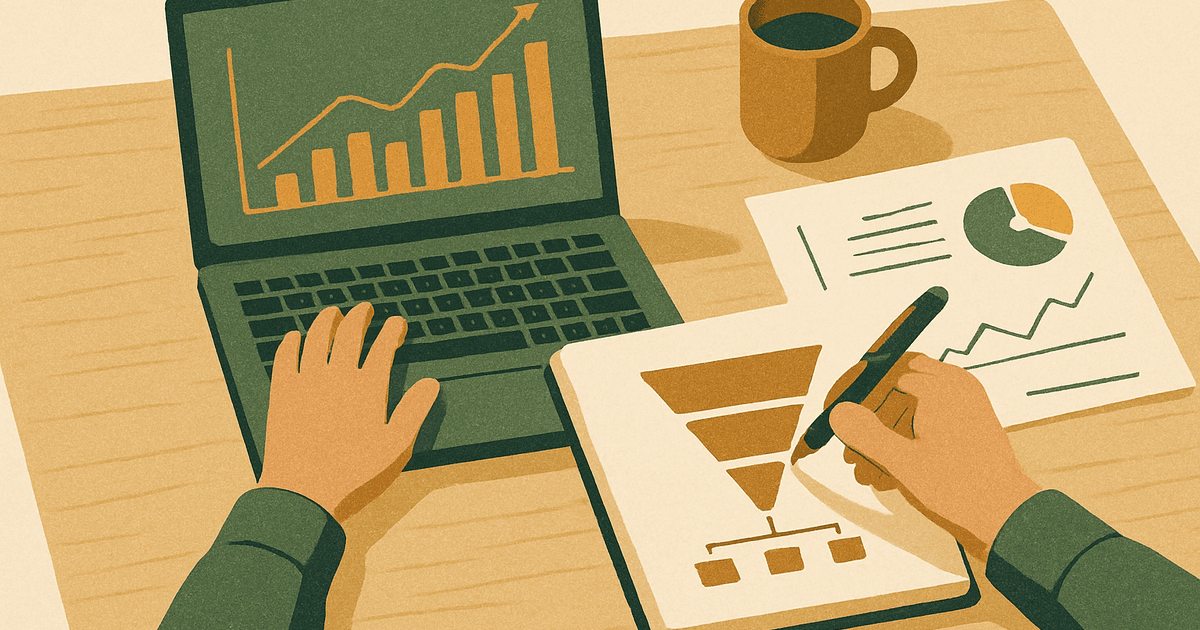
The short version: build one list around one customer problem, send a focused welcome sequence, segment by interest and behavior, and make one clear offer at a time. Most underperforming funnels fail because the audience is too broad, the emails are too generic, or the call to action is buried under too much teaching. For digital products, the buyer usually needs clarity, trust, and a low-friction path to purchase more than they need more content.
How email marketing for digital products actually makes money
Email sells digital products in three moments: right after signup, during a launch, and through ongoing promotions to engaged subscribers. For most sites, the first sale often comes from the welcome sequence because that’s when attention is highest. Launch emails then create urgency and concentration of demand. After that, periodic campaigns and evergreen automations keep revenue moving without needing a live launch every month.
As of 2026, approximately, email service providers and automation tools are mature enough that even smaller creators can run behavior-based funnels without enterprise software. That means the advantage usually comes from positioning and sequencing, not from fancy tooling. A simple funnel with a useful lead magnet, a 5 to 7 email welcome sequence, cart abandonment reminders, and a post-purchase upsell will outperform a bloated setup most of the time.
- Signup source: lead magnet, newsletter form, checkout opt-in, webinar, waitlist
- Intent signal: which topic, page, or product category brought them in
- Core sequence: welcome, education, objection handling, offer, follow-up
- Conversion support: deadline reminders, FAQs, testimonials if you have them, risk reversal
- Retention: onboarding, usage tips, cross-sell, renewal or next-product promotion
Start with the right list strategy
The biggest mistake I see is using one generic newsletter for every product. If someone joins for a Notion template and you immediately pitch a broad SEO course, you create friction. For digital products, list quality matters more than raw size. A smaller list built around a narrow pain point will typically convert better than a large general list.
A better structure is one main brand list with clear tags or segments. Segment by entry point, stated interest, product category, and engagement. That gives you flexibility without fragmenting your audience into too many tiny lists. If you sell multiple products, think in terms of problem clusters rather than products. Subscribers care about outcomes first.
| Segmentation type | What to track | Why it matters for sales |
|---|---|---|
| Lead source | Which page, form, or lead magnet collected the signup | Tells you the subscriber's starting intent |
| Topic interest | Templates, course, software, membership, niche-specific content | Lets you send a relevant product email sequence |
| Engagement level | Opens, clicks, recent activity, site visits | Helps protect deliverability and identify warm buyers |
| Purchase history | Bought, refunded, upgraded, expired, never purchased | Prevents bad promotions and enables upsells |
| Lifecycle stage | New lead, trial user, active customer, lapsed buyer | Changes the message and the offer |
The core email funnel digital products need
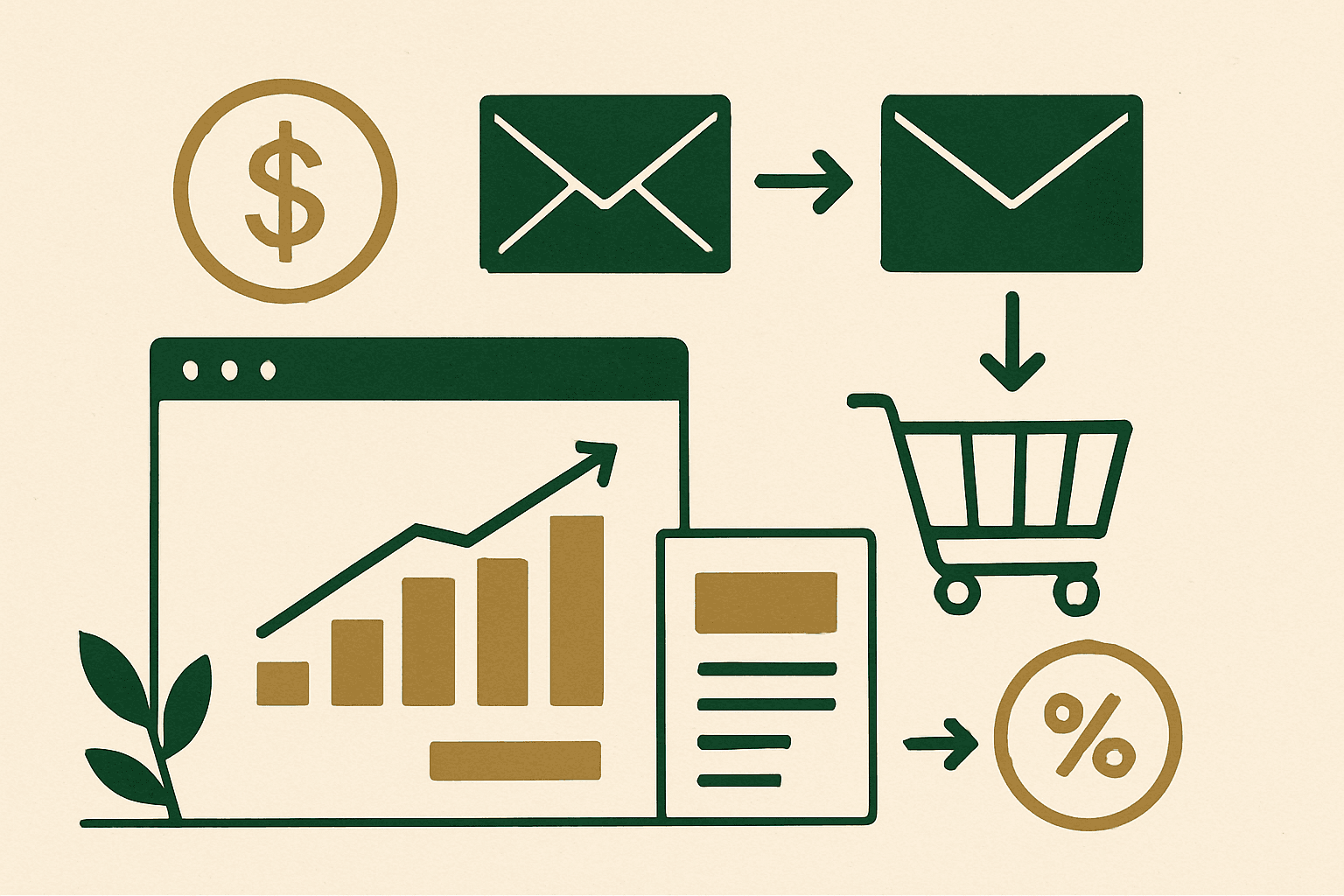
A practical email funnel for digital products has four layers: acquisition, welcome, sales, and post-purchase. You do not need to launch with every possible automation. You do need the basics to be tight.
- Acquisition: collect the email with a lead magnet, waitlist, quiz, free sample, or newsletter promise tied directly to your product category.
- Welcome sequence: deliver the promised asset, establish the problem, teach one or two useful ideas, handle objections, and present the product clearly.
- Sales sequence: make the offer, show who it is for, explain the outcome, address friction, and follow up with deadline or bonus reminders if relevant.
- Post-purchase sequence: confirm access, reduce buyer confusion, drive activation, request feedback, and cross-sell only after the first product delivers value.
For most creators, the welcome sequence is the highest priority because it captures new demand. A product email sequence tied to a specific problem usually outperforms a broad newsletter because every message builds toward one buying decision. If your site monetization plan includes products as a core revenue stream, this should sit alongside your broader strategy for selling digital products.
A simple 7-email product email sequence
Here’s a structure that works well for many digital products. The exact timing depends on price, complexity, and buying urgency, but the flow is broadly applicable.
| Goal | Typical angle | |
|---|---|---|
| 1. Welcome + delivery | Fulfill promise and set expectations | Deliver lead magnet or next step, explain what they’ll learn, invite a small reply |
| 2. Problem framing | Show you understand the pain point | Name common mistakes and the cost of not solving them |
| 3. Quick win | Build trust with useful help | Share a tactic, checklist, or mini framework that creates progress |
| 4. Product introduction | Bridge content to offer | Explain how the product solves the problem faster or more completely |
| 5. Objection handling | Reduce hesitation | Address time, skill level, price, fit, and implementation concerns |
| 6. Social proof or use cases | Increase confidence | Show scenarios, outcomes, or customer examples if available |
| 7. Close | Ask for the sale directly | Clear CTA, optional bonus or deadline, reminder of who the offer is for |
This does not mean every sequence must be seven emails. Lower-priced products often convert with 3 to 5 emails. Higher-priced courses, cohorts, or software can need longer nurturing. The rule is simple: each email should move the buyer one step closer to a decision. If an email is interesting but doesn’t change buying intent, cut it.
Timing and cadence
For a welcome or launch sequence, daily emails are usually fine for a short period when the subscriber has high context. Problems start when creators send daily forever or keep emailing cold subscribers who stopped engaging months ago. For evergreen digital products, spacing 1 day apart early in the sequence and then slowing to every few days is a sensible default.
What to write in each email
- One idea per email
- One primary CTA
- Plain language over clever copy
- Specific outcomes over vague inspiration
- Natural proof over hype
- A visible link to the product page before the footer
Launch emails vs evergreen emails
Both models work. The right choice depends on traffic consistency, audience size, and how often your product changes. Evergreen is better when your traffic is steady and the offer converts without a lot of live energy. Launches are better when your audience responds to events, deadlines, or updated versions.
| Model | Best for | Tradeoff |
|---|---|---|
| Evergreen funnel | Consistent traffic, stable products, smaller teams | Usually lower peak revenue, but simpler and steadier |
| Live launch | New products, major updates, engaged audience spikes | More work and calendar pressure, but stronger urgency |
| Hybrid | Creators with ongoing traffic plus seasonal pushes | Requires planning, but often gives the best balance |
A hybrid model is often the sweet spot: run an evergreen welcome sequence all year, then layer in launches for new products, price changes, bonuses, or seasonal demand. That lets you monetize every subscriber while still creating bursts of urgency when it matters.
Benchmarks and realistic expectations
Email performance varies by niche, geography, season, list quality, price point, and traffic source, so avoid hard promises. As of 2026, approximately, healthy lists for digital products often see stronger click and conversion performance from segmented welcome sequences than from broad newsletters. Lower-ticket products typically rely on volume and impulse-friendly positioning, while higher-ticket offers rely more on trust, objection handling, and repeated exposure.
For economics, model ranges rather than exact numbers. Revenue per subscriber and campaign results vary by niche, geography, and season. A creator selling a low-ticket template to a broad consumer audience will usually see a very different outcome from a B2B operator selling a specialized toolkit or course. That’s normal. The useful question is whether each step in the funnel is improving: more qualified subscribers, more clicks to the sales page, more checkout starts, and more completed purchases.
About 120 buyers → $35,640 at launch
Use a simple model: monthly signups × welcome-sequence click rate × sales-page conversion rate × average order value. That tells you where leverage is. If list growth is slow, improve acquisition. If clicks are weak, rewrite emails. If clicks are healthy but purchases are soft, fix your product page, offer, pricing, or checkout.
The tools that matter most
For digital products, you mainly need four capabilities: reliable deliverability, segmentation, automation, and purchase tracking. Most mainstream email platforms can do this. The right choice depends more on your product stack and workflow than on feature checklists.
- Signup forms and landing pages tied to clear offers
- Tags or segments based on source and interest
- Automated welcome and post-purchase flows
- Event tracking for visits, starts, and purchases
- Suppression rules so buyers stop seeing the wrong pitch
- Basic reporting on opens, clicks, conversions, and unsubscribes
If you also monetize with ads, remember that email gives you a more controllable revenue layer than display alone. Ad networks like AdSense, Ezoic, Monumetric, Mediavine, and Raptive can be strong complements depending on traffic thresholds, as of 2026, approximately, but they do not replace the margin and ownership advantages you get from selling your own digital products through email.
Common mistakes that kill conversions
- Offering a lead magnet unrelated to the paid product
- Sending educational emails with no transition to the offer
- Pitching too many products in the same sequence
- Ignoring segmentation and sending the same message to everyone
- Writing subject lines that create curiosity but not qualified clicks
- Failing to remove buyers from active sales pushes
- Making the sales page do all the work after weak email pre-sell
- Overusing discounts instead of improving positioning
How to improve an underperforming funnel
Diagnose in order. First, confirm you’re attracting the right subscribers. If the lead magnet is broad and the product is narrow, conversion will struggle no matter how good the emails are. Second, look at clicks from each message. Low clicks usually mean weak angle, weak CTA, or poor product fit. Third, compare click intent with the sales page. If subscribers click but don’t buy, the mismatch is usually on the page, checkout flow, or offer structure.
- Tighten the lead magnet so it naturally leads to the product
- Rewrite the first three emails before touching later ones
- Add one clear CTA higher in the email
- Create separate sequences for your top one or two interests
- Exclude recent buyers from ongoing pitch emails
- Test a shorter sequence if the product is inexpensive
- Test a longer objection-handling sequence if the product is premium
Also watch deliverability. If engagement falls across the board, your email copy may not be the only issue. Prune inactive subscribers when appropriate, resend selectively to non-openers only when it makes sense, and keep your sends relevant. A smaller active list is often more profitable than a larger disengaged one.
What to prioritize first
If you’re starting from scratch, do these in order: create one high-intent signup offer, write one welcome sequence, make one strong product page, and install one post-purchase onboarding flow. That is enough to start learning. You do not need a giant automation map on day one.
Then add sophistication only where the data justifies it: interest-based branches, abandoned checkout emails, seasonal launches, VIP offers for repeat buyers, and re-engagement campaigns for lapsed subscribers. Keep the machine simple until revenue proves the next layer is worth the maintenance.
If you want to expand beyond selling your own offers, email can also support sponsorships and partner promotions, but keep that separate from your product funnel so you don’t dilute buyer intent. For that side of the model, see affiliate email marketing.
How many emails should a digital product funnel have?
Should I use a live launch or an evergreen sequence?
What is the best lead magnet for selling digital products?
How often should I email my list when selling digital products?
What should I track in an email funnel for digital products?
Get the next guide by email
One practical email when we publish.