
Affiliate Marketing With an Email List (2026)
Learn affiliate marketing email list strategies that convert in 2026, including list setup, offers, compliance, and email sequences.
Yes, an affiliate marketing email list can monetize extremely well in 2026, approximately because email gives you direct access to readers without depending on search or social algorithms. In practice, email affiliate marketing works best when the list is built around a clear problem, the offer matches the subscriber's intent, and the recommendation is specific instead of generic. If you're already using affiliate content on your site, start by pairing this with review-style pages and product comparisons from affiliate product reviews, then use email to follow up with context, objections, and timing.

The big advantage is leverage: one good sequence can keep earning as new subscribers join. The catch is that affiliate newsletter revenue varies by niche, geography, season, and buyer intent. A finance, software, or B2B list typically monetizes better than a broad entertainment list. A list where people signed up for a tool recommendation or buyer's guide usually outperforms a list built on general news updates.
How affiliate marketing with an email list actually works
The model is simple: someone joins your list, you send useful emails, and some of those emails include affiliate links to products or services that solve the problem they signed up to solve. You earn a commission when a subscriber buys through your link. If you need the mechanics, tracking, cookies, and attribution broken down first, read how affiliate marketing works.
- Subscriber joins through a lead magnet, newsletter form, quiz, or content upgrade.
- You tag or segment them based on topic, source, or stated interest.
- You send a welcome sequence that builds trust and frames the problem.
- You recommend one or more affiliate products at the right stage of awareness.
- You continue sending broadcast emails, seasonal promotions, and follow-up education.
- Clicks and conversions accumulate over time from both evergreen and timely campaigns.
What matters most is relevance. If you build a list on one topic and promote loosely related offers, conversions usually fall off fast. If you build a list on a tightly defined use case and recommend tools that fit that exact use case, conversions are usually much better.
When email affiliate marketing works best
Email works best when the subscriber is already in a buying journey. In other words, the closer your opt-in is to commercial intent, the easier monetization gets. A subscriber who joined to get a buyer's checklist, software comparison, setup tutorial, or curated recommendations is far more valuable than a subscriber who joined for vague inspiration.
| List type | Typical intent | Affiliate fit | Expected performance |
|---|---|---|---|
| Buyer guide list | High | Excellent | Usually strongest because subscribers are already evaluating options |
| Tutorial or setup list | Medium to high | Very good | Works well when tools are naturally part of the workflow |
| Newsletter with niche commentary | Medium | Good | Can perform well if the niche has clear product demand |
| Broad lifestyle or entertainment list | Low to medium | Mixed | Usually lower conversion unless offers are tightly targeted |
As of 2026, approximately, the strongest affiliate email lists tend to be in software, hosting, creator tools, business services, education, finance, health, and hobby niches with clear purchase paths. Revenue per subscriber varies by niche, geography, and season, so it's better to optimize for subscriber intent and offer fit than to chase blanket benchmarks.
Build the list around buying intent, not just traffic
A common mistake is trying to monetize a generic newsletter after the fact. A better approach is to design the list around the products you can honestly recommend. That does not mean creating a thin list just to push offers. It means understanding the problem first, then creating an email experience that helps the subscriber move from confusion to decision.
- Choose one audience and one core problem.
- Create an opt-in that attracts people with real purchase intent.
- Map the obvious categories of products that solve the problem.
- Pick affiliate programs with strong landing pages, good conversion paths, and sensible commission terms.
- Write an onboarding sequence before you drive serious traffic.
- Segment subscribers based on what they clicked or asked for.
The best affiliate offers to send to an email list
The easiest offers to sell by email are usually products with a clear use case, obvious payoff, and low friction. Software is a strong category because the pain point is concrete and the transformation is easy to explain. Hosting, WordPress tools, SEO platforms, email service providers, course platforms, AI tools, creator software, and business services are common examples.
Physical products can work too, especially in enthusiast niches, but they often need stronger merchandising, better timing, and more visual support. High-ticket offers can perform very well when the list trusts you, but they usually need more education and objection handling.
- Use one primary recommendation per email when possible.
- Prefer products you've tested, implemented, or researched deeply.
- Promote offers with a clear next step: free trial, demo, starter plan, consultation, or first purchase.
- Avoid stacking too many unrelated links in the same message.
- Match the product price and complexity to subscriber awareness.
A simple affiliate newsletter structure that converts
Most affiliate list owners overcomplicate the email. In practice, simple usually wins: one problem, one insight, one recommendation, one call to action. People do not need a mini blog post in every email. They need a useful reason to click.
| Email part | What to include | Why it matters |
|---|---|---|
| Subject line | Specific benefit, pain point, or curiosity tied to the offer | Drives opens without resorting to clickbait |
| Opening | Acknowledge the problem or scenario | Makes the email feel relevant immediately |
| Body | One practical insight or short story from experience | Builds trust and adds context before the pitch |
| Recommendation | Who the product is for, who it is not for, and why | Improves click quality and reduces buyer mismatch |
| CTA | One clear next step | Prevents choice overload |
This structure works for welcome emails, weekly newsletters, launch sequences, and post-click follow-ups. The point is not to hide the affiliate recommendation. The point is to make it useful.
An email sequence for affiliate marketing email list revenue
If you only send occasional promos, you're leaving money on the table. A short evergreen sequence is usually the highest-leverage place to start.
- Email 1: Deliver the opt-in and set expectations for what subscribers will receive.
- Email 2: Teach one foundational concept that helps the subscriber make better decisions.
- Email 3: Share the common mistakes people make and how to avoid them.
- Email 4: Introduce your primary affiliate recommendation with clear fit criteria.
- Email 5: Compare alternatives or explain when a cheaper option makes more sense.
- Email 6: Answer common objections, implementation questions, or setup concerns.
- Email 7: Add a deadline, seasonal hook, bonus, or reminder if one genuinely exists.
This works because people rarely buy the first time they hear about a product. They need context. They need confidence. They need to know whether the offer matches their situation. Your sequence should do that job.
Segmentation is where email affiliate marketing gets much better
Once your list is large enough to have mixed intent, segmentation usually produces a meaningful lift. Instead of blasting the same offer to everyone, split people by the topic they joined from, the content they clicked, the tools they already use, or their level of experience.
- Segment by opt-in source: buyer guide, tutorial, newsletter, quiz, or review page.
- Segment by clicks: beginners click different links than advanced users.
- Segment by product category: software, services, education, or physical gear.
- Segment by funnel stage: researching, comparing, ready to buy, or existing customer.
- Segment by engagement: active readers can receive more direct promotions than cold subscribers.
Even basic segmentation can help. If someone clicked a comparison email, send more decision-stage content. If they clicked beginner tutorials, keep the educational angle longer before sending stronger promotional emails.
Compliance, trust, and what not to do
Trust is the asset. Burn it once and your list quality drops fast. That means disclosing affiliate relationships clearly, avoiding hype, and not pretending every product is the best fit for everyone.
- Do not recommend products you have not vetted at all.
- Do not hide important limitations, pricing realities, or renewal terms.
- Do not send affiliate-heavy emails to a list that signed up for something unrelated.
- Do not overmail cold subscribers just because a promotion is live.
- Do not rely on one program or one merchant for all revenue.
A practical safeguard is to explain who should not buy the product. That tends to improve trust and often improves conversion quality too, because the clicks you do get are more qualified.
How much an affiliate email list can earn
There is no universal per-subscriber number that applies across niches. As of 2026, approximately, earnings from an affiliate marketing email list can range from modest side-income levels to substantial monthly revenue, but results vary by niche, geography, season, list quality, send frequency, and the payout structure of the offers. Software and business-focused lists often monetize better than broad consumer lists. High-intent subscribers usually outperform larger but less targeted lists.
If you're also running display ads on your site, those revenue models can complement each other. As of 2026, approximately, site owners often pair affiliate email monetization with ad stacks such as AdSense, Ezoic, Monumetric, Mediavine, or Raptive on content pages, then use email to monetize the higher-intent segment that wants product guidance. Ads usually monetize pageviews; email usually monetizes attention and trust.
Metrics that matter more than open rate
Open rates are directionally useful, but they are not the main goal. For affiliate newsletters, the better questions are whether the right people are clicking, whether those clicks convert, and whether your list is compounding over time.
| Metric | Why it matters | What to watch for |
|---|---|---|
| Click-through rate | Shows whether the offer and email angle resonate | Low CTR usually means weak relevance or weak framing |
| Click-to-conversion rate | Shows whether the traffic is qualified | Low post-click conversion may mean poor merchant fit or unclear expectations |
| Revenue per subscriber | Useful for comparing segments and sequences | Interpret by niche and traffic source, not in isolation |
| Unsubscribe and spam complaint rate | Protects deliverability and trust | Spikes often mean misaligned offers or aggressive send cadence |
| Segment-level earnings | Helps you find profitable intents | Often reveals that smaller segments outperform the general list |
The best long-term play: combine affiliate offers with your own assets
The strongest setup is usually not affiliate-only. Use affiliate recommendations where they genuinely help, but also build your own assets: tutorials, comparison pages, calculators, templates, digital products, or consulting pathways. That gives you more control over revenue and reduces dependence on program terms changing.
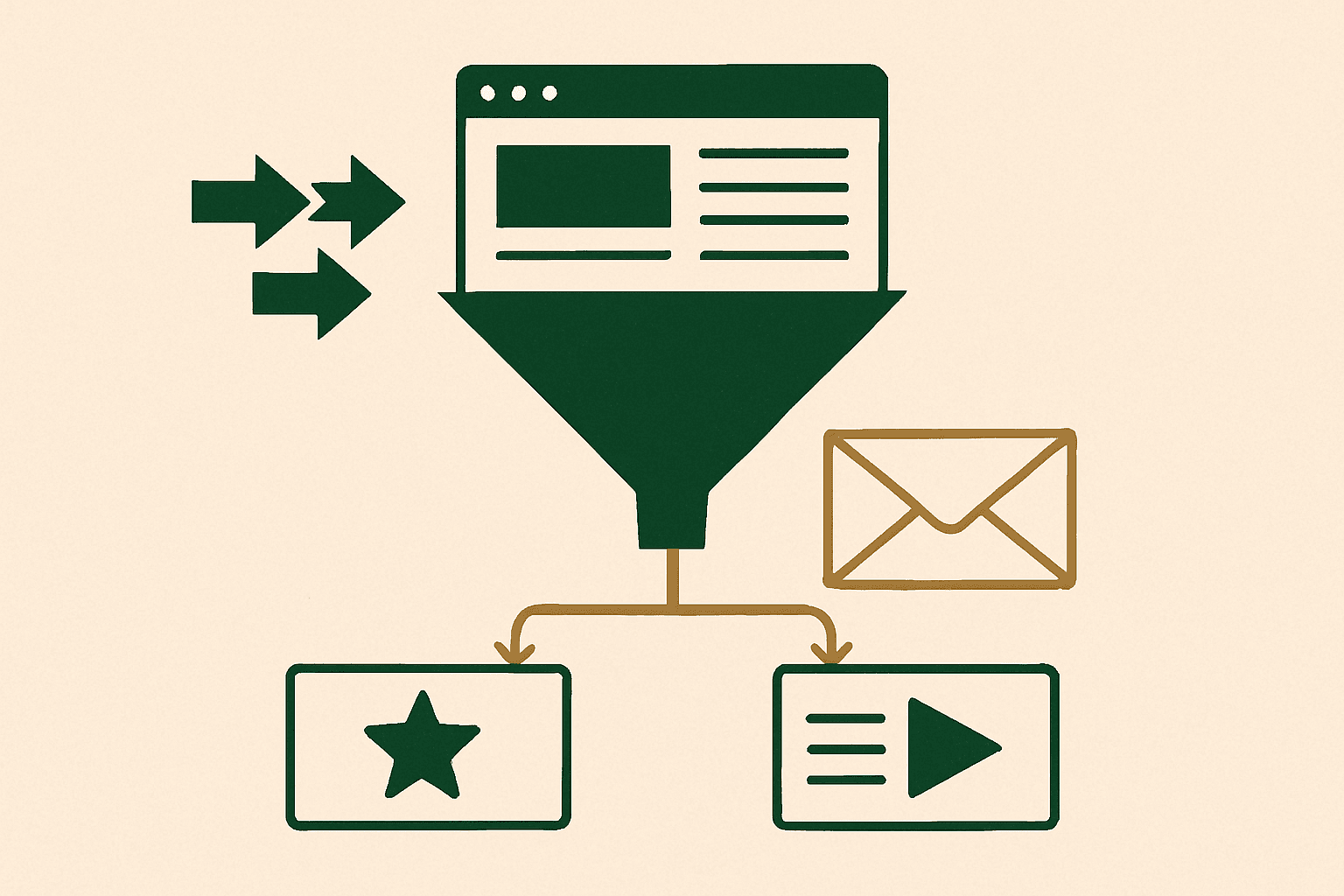
If your audience is responsive, adding your own product layer often increases total revenue and makes affiliate promotions feel more contextual instead of constant. For that model, see email marketing for digital products.
A practical starting plan
- Pick one topic with clear commercial intent.
- Create one lead magnet tied to a buying decision.
- Choose one or two affiliate offers you can recommend honestly.
- Write a 5 to 7 email welcome sequence.
- Add basic segmentation based on opt-in source and clicks.
- Send regular emails that teach, compare, and recommend.
- Review clicks, conversions, unsubscribes, and segment performance monthly.
If you keep the list tightly aligned with subscriber intent, affiliate marketing with an email list can become one of the more durable monetization channels on a content site.
Can you do affiliate marketing with an email list?
How often should I send affiliate emails to my list?
What types of affiliate offers work best in an affiliate newsletter?
Do I need a big list to make money from email affiliate marketing?
How do I disclose affiliate links in emails?
Get the next guide by email
One practical email when we publish.